





How Juno uses PostHog self-driving PRs to make health tracking less tiring
Sep 23, 2026
Contents
AI health assistant for chronic illness
- Healthcare
- AI
- Engineering
- Product
Juno is an AI health assistant for people living with chronic illness. Despite only launching recently out of YC's Spring 2026 batch the team has already found product-market fit and built a user base of 250,000 users who rely on it for health tracking support.
"People with a chronic illness spend 99.99% of their lives outside the medical system," says Marshall Gould, Juno's CEO, who studied genetics at UCL and genomic medicine at Oxford University. "I've experienced that personally as someone who has myalgic encephalomyelitis/chronic fatigue syndrome and I know that not everyone can afford a personal care assistant. So much attention goes into doctor's appointments, but people still have to manage their health between visits, often with little day-to-day support. We built Juno to help fill that gap."
Marshall built the app himself, but a side-effect of the rapid success and growing user base was that he found he couldn't keep up with bug reports and feature requests. Rather than balloon the size of the team, he created a system of agents to fix simple issues for him by pulling data from Mixpanel.
"Someone would report a bug, we'd pull the context from Mixpanel if we could and the AI would test whether it could replicate the bug, fix it, and push a PR with a simulator recording I could watch," he says. "Then I'd review the code and press merge. It worked, but was cumbersome and Mixpanel didn't reliably have all of the data the agents needed."
Because agents didn't always have the right context to identify and fix issues, Marshall began looking for a tool which could collect more information – and so soon switched from Mixpanel to PostHog.
After installing PostHog with the wizard he had one platform to monitor analytics, track errors, and observe behaviour – as well as PostHog's self-driving features to turn that data and context into PRs.
"PostHog already did what we were trying to build, so we didn't need to build our own version," he says. "It's so much nicer to have a system that's actually meant for it and integrated with all of the context seamlessly. Our merge rate for self-driving PRs is roughly 90% now that we use PostHog for self-driving."

It's incredible that these agents can run autonomously to identify these things. You wake up in the morning and there are PRs waiting for you. All you have to do is review and merge.
Self-driving development and user privacy
As a healthtech app, Juno takes privacy further than most consumer apps, and doesn't sell or share personal data. It strips PII and PHI before storing anything, hashes everything in its database, and covers the AI models it uses with zero data retention agreements and BAAs so user data is never used for training.
This approach is great for user privacy, but makes debugging harder for humans because it's difficult to spot a bug when you have privacy protections in place. Self-driving agents, on the other hand, can pull supporting context from several tools at once.
"If someone's being vague about their problem and hasn't shared logs, we can prompt PostHog on what it could be based on their analytics, error reports, and previous bugs," Marshall says. "Realistically, if one user reports something, another 100 users have it too."
A PostHog scout doesn't need to read a user's data to see rage clicks and know something is wrong, and it can piece the rest together from Error Tracking and Product Analytics. That's enough context to open a PR even when the bug report is thin – which is important because in a health app even small bugs can have a big impact.
"If something goes wrong in our medication log, for example, people might miss their medications or get dosages wrong," Marshall says. "If they're not entering the right thing, or they're not getting notifications? Those are the things we need to find straight away and squash as soon as they happen."
PostHog helped Juno identify friction when people returned to log medication they had already taken. Someone catching up on ten medications had to tick them off individually. Juno added "Log all" to record the scheduled group in one action – less repetitive work for people already dealing with fatigue.

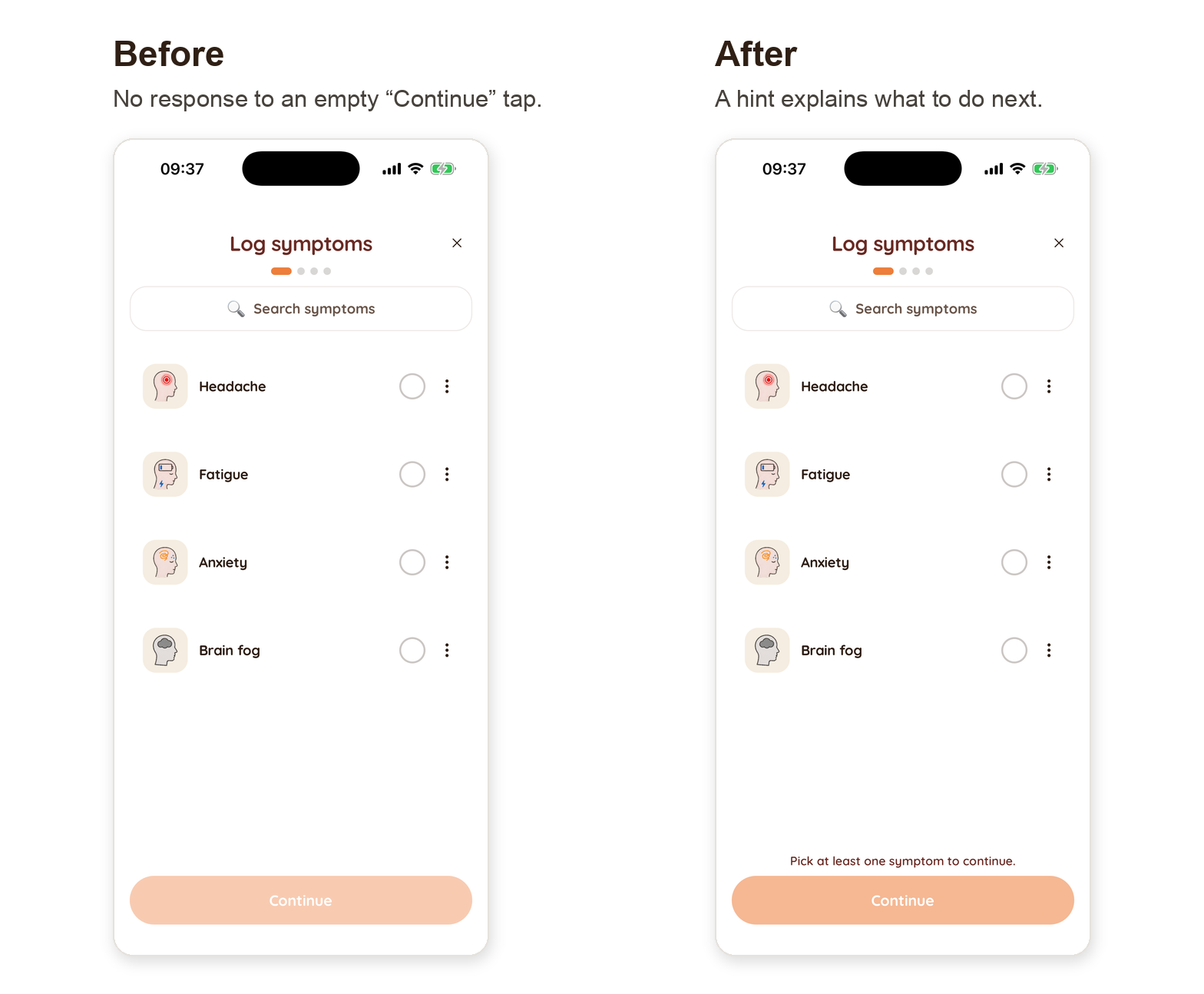
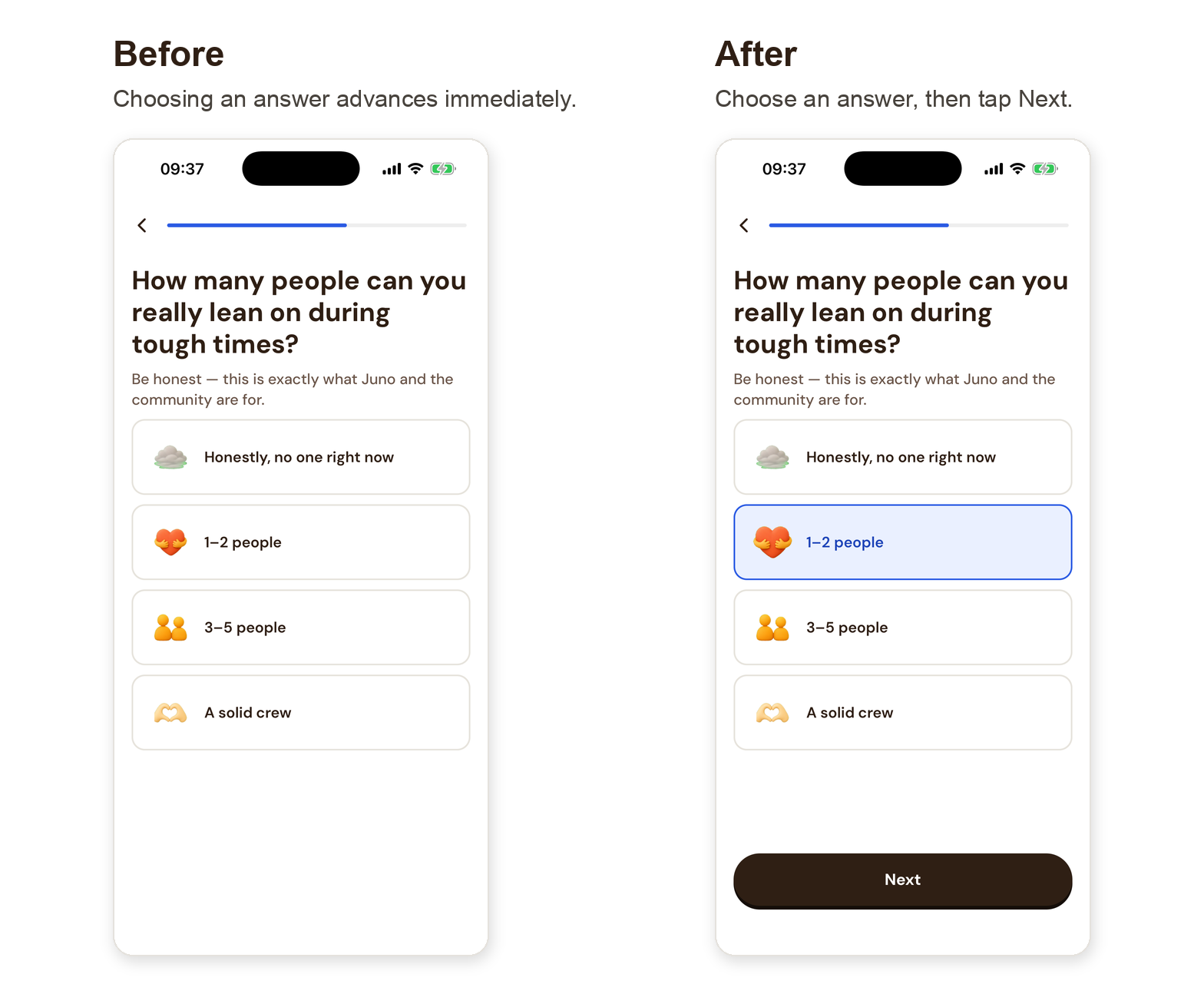
The same loop has fixed dozens of other issues for Juno: a chat box that hung so people couldn't message the in-app AI, dose-logging errors that only appeared on certain screen sizes, users getting stuck on frozen tabs, and dead taps that were losing drafts in the symptom logging flow.
Are self-driving PRs perfect?
No. Marshall still commits to reading every one and staying in the self-driving loop, even for fixes where he could auto-merge. Some bugs also can't be reproduced easily as they're dependent on device issues, like whether the phone is charging or in low power mode. In these cases Marshall reviews the code closely, but has come to trust PostHog's ability to solve the issue most of the time.
"It's not 100% accurate and I do sometimes edit slightly," he says. "We generally like to test on the simulator ourselves, depending on how much time we have. Sometimes we get an AI to test it if it's a high-confidence fix that just needs confirming."
"Right now we've merged 26 of our last 30 self-driving PRs though, and we think it's going great. The only thing PostHog can't do for us yet is generate React Native source maps, but I'm sure that will change," Marshall says. "We want to be fully PostHog-pilled going forward."
There is plenty left for Juno to build. The next release will add around 100 environmental data sources, including pollen count, weather, and air pressure, so Juno can surface trends earlier and move from tracking symptoms toward preventing them.
"With so much left to build, it's great that PostHog is helping us not just gather better data, but also ship faster and increase stability so users can rely on us to track their health."
PostHog is your product's context layer. With a full suite of developer tools – AI observability, product analytics, session replay, feature flags, experiments, error tracking, logs, and more – PostHog ingests and stores all the data agents need to diagnose problems, uncover opportunities, and ship fixes. A data warehouse and CDP tie it all together, unifying that context into one source agents can read across. You can steer it all from Slack, the web app, the desktop (PostHog Desktop), or your own editor via the MCP.